
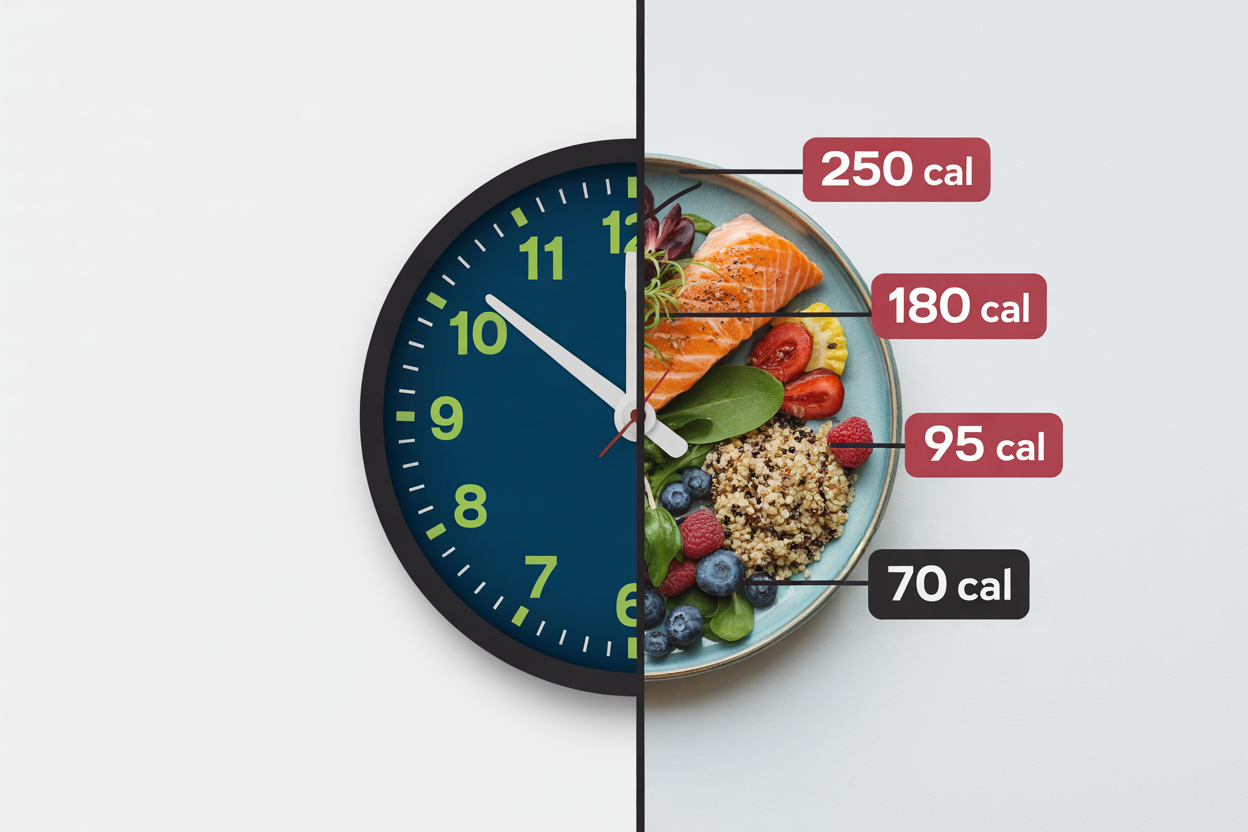


Intermittent fasting didn’t get popular because people love structure. It got popular because it sounds like you don’t have to count.
If you’re googling “do calories count intermittent fasting”, you’re not asking because you love calorie math. You’re asking because 16:8 feels like it should come with a loophole. Like the fasting hours should “earn” you freedom during the window.
Here’s the truth: fasting controls timing, not physics. The clock can help you eat less without trying so hard, but it doesn’t cancel out what happens when you eat more than your body needs.
No purity tests here. No “always” rules. Just a clear map of what 16:8 does, what it doesn’t, and how to run it in a way that actually matches your goal.
What 16:8 Actually Does (and what it does not do)
16:8 is simple on paper: you fast for 16 hours then eat inside an 8-hour window. During the fast you stick to zero-calorie options (water, plain tea, black coffee, and truly zero-cal electrolytes if you use them). During the window, you eat your normal food.
That timing change can do a few useful things:
- It reduces the number of opportunities to snack. Fewer “accidental” calories.
- It creates structure. Some people eat better when there’s a start and stop.
- It can lower “food noise” because the morning becomes less negotiable.
But 16:8 does not automatically do this:
- It does not guarantee a calorie deficit.
- It does not erase overeating because you waited longer.
- It does not turn ultra-processed chaos meals into “fine” because they happened at 1 p.m.
A randomized trial of 16:8 time-restricted eating found that simply limiting the eating window (without other changes) didn’t outperform a control schedule for weight loss or cardiometabolic markers. That’s the point: structure can help, but structure isn’t magic.
The clock decides when you eat. Calories decide what happens next.
The two questions you actually need to answer
Most fasting confusion comes from skipping the only question that matters:
1) What are you fasting for?
There are two lenses.
Lens 1: strict fast physiology. This is the “keep inputs minimal” approach. People use it for gut rest, deep fasting experiments, autophagy-focused goals, or just because they like clean rules.
Lens 2: goal-based outcomes. This is most people, whether they admit it or not. Fat loss. Weight maintenance. Better appetite control. A routine they can repeat without thinking about food all day.
And timing can matter, especially earlier eating windows. A controlled trial in men with prediabetes found that early time-restricted feeding improved insulin sensitivity and other markers even without weight loss.
2) What’s your goal inside the window?
This is why how many calories to eat during intermittent fasting 16/8 depends on your goal, not your fasting app streak.
- Fat loss: a modest deficit you can sustain
- Maintenance: steady intake that matches your activity
- Muscle gain: a surplus plus enough protein and training stimulus
The window is not a free-for-all. It’s your chance to hit the target that matches your goal.
So… do calories count in intermittent fasting? Yes. Here’s the real reason.
Yes, calories still count. Fasting is not a calorie exemption.
Fasting feels “special” because it can make a deficit easier. Less grazing. Fewer food decisions. Less all-day snacking.
But there’s a trap hiding inside that simplicity:
“I ate less often” starts to feel like “I ate less.”
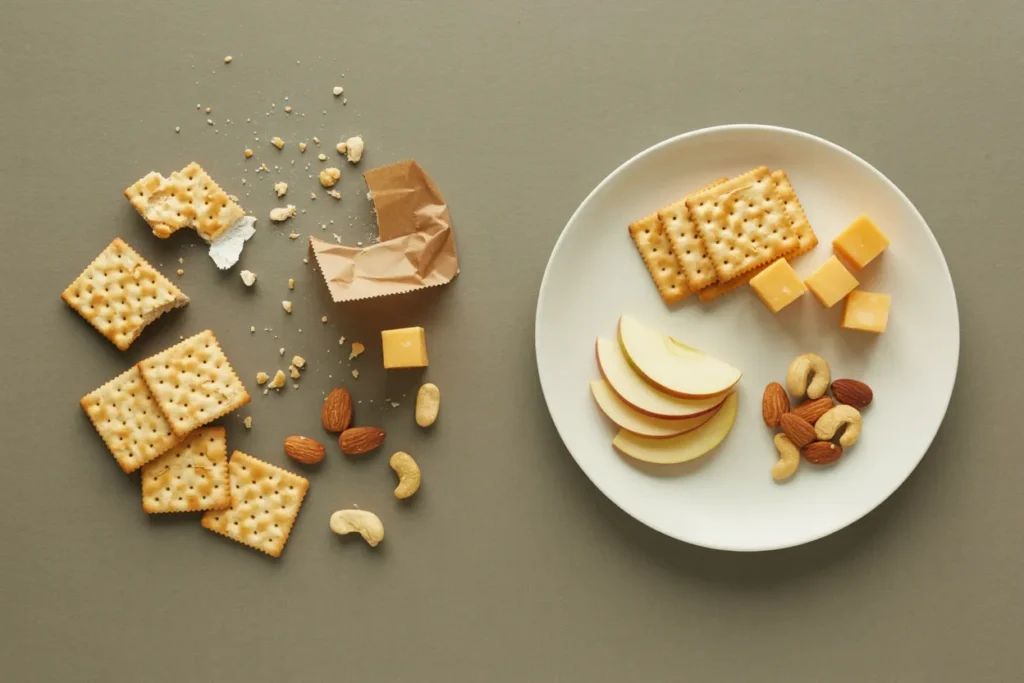
Sometimes it’s true. Sometimes the first meal turns into compensation.
You can absolutely fast 16 hours and still eat three pizzas in the window. And your body will respond like you ate three pizzas.
That’s not a moral statement. It’s not “bad.” It’s just input and output.
Time-restricted eating doesn’t automatically outperform other approaches. When the window becomes a compensation zone, the advantage disappears.
How many calories should you eat on 16:8? Start here.
Your daily calorie target doesn’t change just because you fasted. The body still runs on total intake over days and weeks.
If you want a simple approach without turning your life into tracking:
- Pick your goal. Lose fat, maintain, gain muscle.
- Pick a calorie level you can repeat. Not your dream number. Your real-life number.
- Distribute it inside the window so you don’t “save up and detonate.” If you’re starving when the window opens, you’re going to eat fast. Fast eating is where plans go to die.
A helpful mental check: if you’re consistently hungry, tired, and thinking about food all day, the “perfect” calorie target is too aggressive. The best plan is the one you can execute calmly.
The hidden problem: the “window panic” pattern
This is the most common 16:8 failure mode:
You open the window ravenous → you eat quickly → you overshoot → you feel annoyed → you promise to be stricter tomorrow → repeat.
It’s not lack of discipline. It’s delayed eating with no plan.
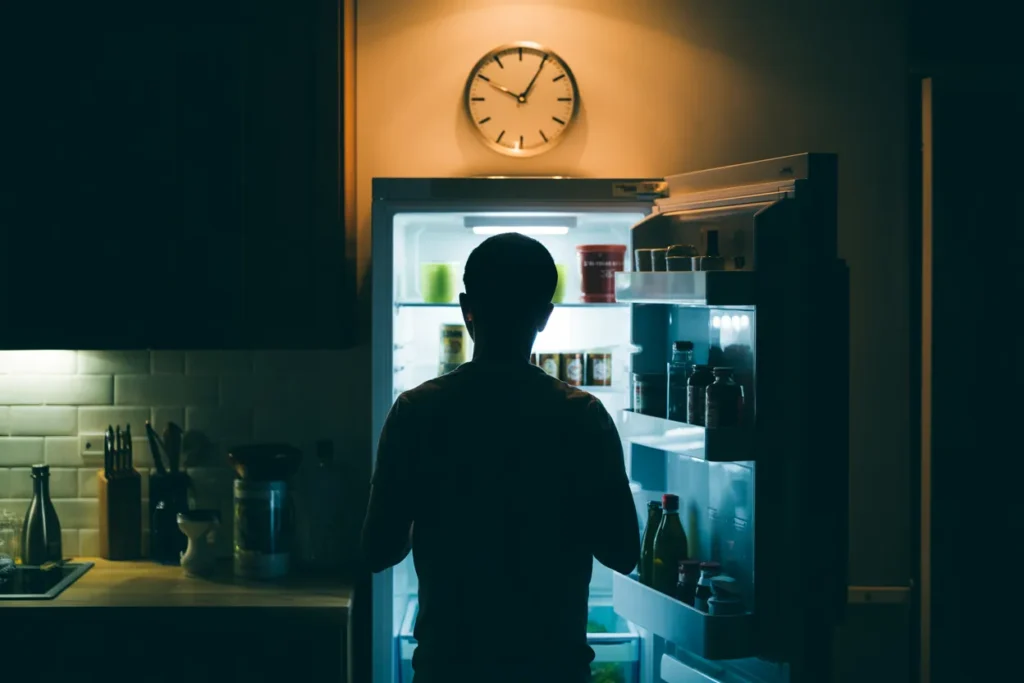
Fix it without tracking everything:
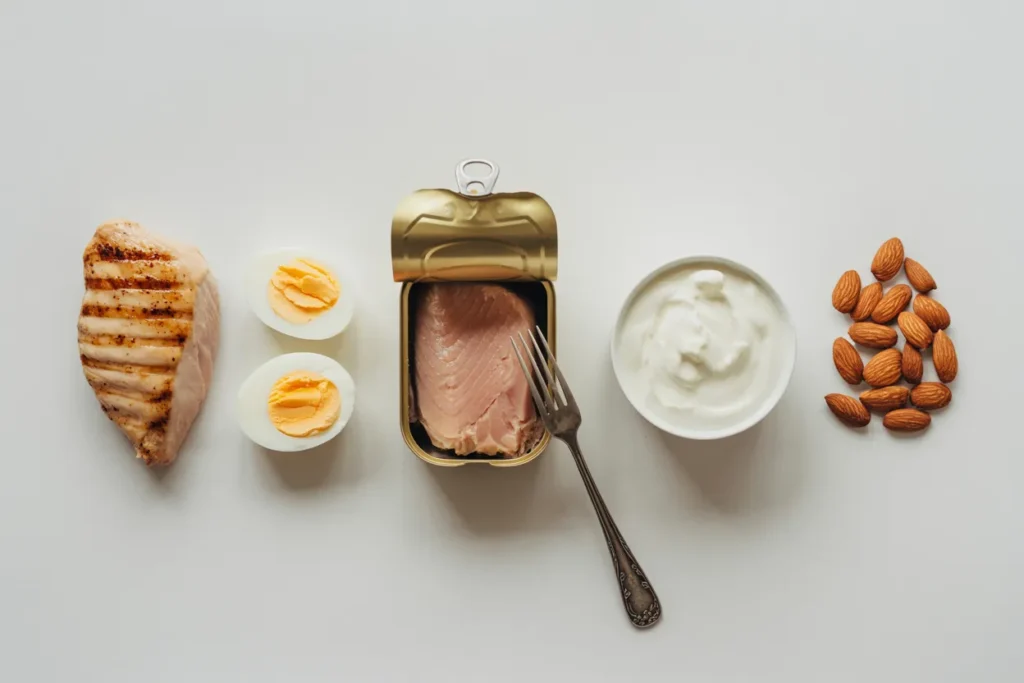
- Break the fast with protein + fiber + water first. Not because it’s “clean.” Because it slows the spiral.
- Pre-decide your first meal before the window opens. Make the first decision while you’re calm, not while you’re hungry.
- Don’t start with trigger foods at peak hunger. If you always blow it with cereal, pastries, chips, or delivery, don’t make those the first thing your body meets after 16 hours.
You’re not weak. You’re just opening the window at the loudest hunger moment and hoping for good behavior.
Example 16:8 eating window schedules (with calorie ranges)
These are templates, not commandments. Use them to stop improvising.
Schedule 1: fat-loss friendly (moderate deficit)
- 12:00 Break fast: 35–45% of daily calories (protein-forward)
- 3:00 Snack: 10–15%
- 7:00 Dinner: 40–50%
- 8:00 Close window
Schedule 2: training / higher activity day
- 11:00 Meal 1: 30–35%
- 2:00 Meal 2: 25–30%
- 5:30 Snack: ~10%
- 7:30 Dinner: 30–35%
Micro-guidelines that keep this from falling apart:
- Don’t “save calories” all day then try to cram them into one dinner.
- If late-night overeating is your issue, move the window earlier.
- If you want to experiment with earlier calorie distribution, there’s real evidence it can help some people. A systematic review/meta-analysis of randomized trials found greater weight loss with time-restricted eating, lower meal frequency, and earlier caloric distribution in the day.
Timing can help. It still doesn’t replace total intake.
Build Your 16:8 Eating Schedule
Tell us your goal, set your window, enter your calorie target — and get a personalized meal timing plan.
The window is not a free-for-all. Your goal determines the right calorie level and distribution.
Your 8-hour eating window starts here. If late-night overeating is your pattern, move the window earlier.
Enter your real-life number — not your dream number. The best plan is the one you can execute calmly.
“Can I eat anything I want if I fasted?” The honest answer
You can. But your results won’t be magic. Fasting isn’t a cleanse that deletes ultra-processed snacks.
If 80% of your intake is nutrient-dense, you have room for flexibility. You can eat out. You can enjoy food. You can live like a person.
If 80% is hyper-palatable “fast foods,” fasting won’t rescue energy balance. It might even make the binge-reward loop stronger: “I was good all morning, so now I deserve this.”
Your eating window is not a loophole. It’s just a timeframe.
What to prioritize inside the window (so calories work for you)
Protein first
Protein supports satiety, training recovery, and helps protect lean mass during fat loss. Research on intermittent fasting paired with resistance training generally shows fat loss with similar preservation of fat-free mass when training and intake are handled well.
And in a 16:8 time-restricted feeding study in resistance-trained men, fat mass decreased while muscle mass was maintained alongside resistance training.
Fiber and volume
Vegetables, fruit, legumes, and whole-food carbs help you feel full without turning the window into a calorie bomb.
Whole-food carbs when you need them
If you train, walk a lot, or have physically demanding work, carbs can make fasting feel easier because you’re not trying to run on fumes inside the window.
Healthy fats for satisfaction
Fats help meals feel complete, but they’re also easy to overshoot because they’re calorie-dense. Add them on purpose.
Hydration + electrolytes
Especially if fasting gives you headaches, dizziness, or that flat, foggy feeling. Sometimes the “hunger” is just dehydration plus low sodium.
Common mistakes that make 16:8 feel like it “doesn’t work”
- “I fasted, so I deserved it” meals
- Too little protein → hunger chaos
- Liquid calories that don’t satisfy (fancy coffee, juices, alcohol in the window)
- Window too late → nighttime overeating
- Under-sleep + stress → appetite signals louder
- Weekend free-for-all → weekly deficit erased
If you’re lifting and trying to keep muscle, don’t pretend the body cares about fasting ideology. It needs consistent protein and enough total intake to recover. The 16:8 resistance training data makes that pretty clear.
A 14-day test that ends the debate
If you’re not sure whether 16:8 is helping you or quietly sabotaging you, stop guessing. Run a two-week experiment.
Don’t change foods dramatically. Just measure reality. Track:
- hunger waves
- cravings when the window opens
- energy and mood
- sleep quality
- weight trend (weekly average)
- adherence (did you break early? did you binge?)
Look for patterns. Did the window reduce snacking, or did it create a rebound? Did earlier timing help? Did protein calm the chaos?
You don’t need an ideology. You need feedback.
Use the Fasting App by Municorn to set your window, log meals (or photos), and see exactly how different timings affect hunger, cravings, and consistency in your real life. Let your data decide what rules you keep.