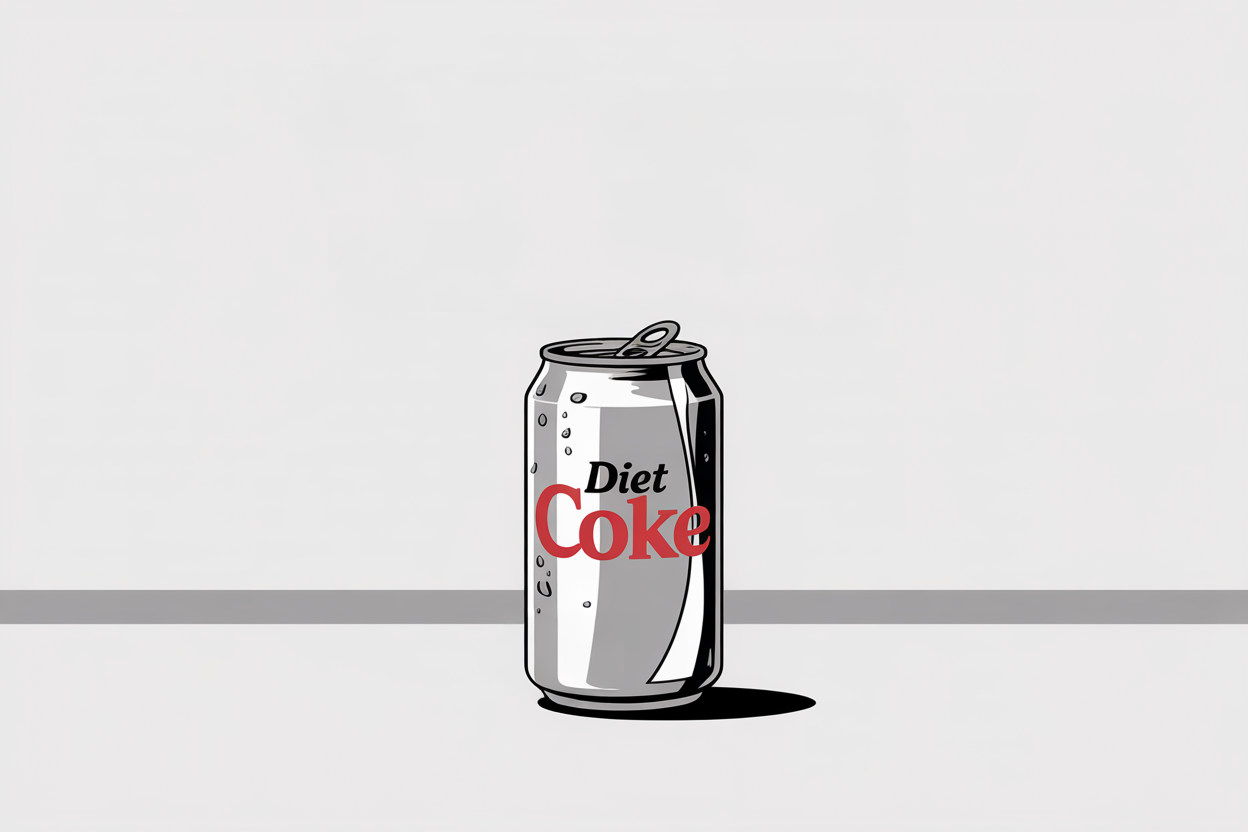


You crack open a Diet Coke mid-fast and pause. “Is this safe… or did I just break it?” You’re not the only one asking. “Zero sugar” sounds reassuring, but sweet taste and certain additives can nudge your body out of a fasted state in ways that don’t always show up on the label. Even while tracking your fast, it’s important to know how Diet Coke might affect your fasting.
What “Breaking a Fast” Actually Means
There are two frames here. The strict version says any calories “break” a fast. The practical version asks whether something interrupts the benefits you’re fasting for: fat burning, steadier insulin, maybe cellular cleanup.
Diet soda is basically calorie-free, so by the strict definition, you’re probably fine. But if your goals include improved insulin sensitivity, the signals your body gets from sweet taste and non-nutritive sweeteners (NNS) can matter even without calories.
What’s in Diet Coke and Coke Zero?
Formulas vary by market, but Diet Coke and Coke Zero commonly use aspartame and acesulfame-K for sweetness, plus carbonation, caffeine, and flavorings. That matters because studies on NNS show mixed effects. Some neutral, while others suggest shifts in insulin response or the gut microbiome. Those findings don’t prove Diet Coke itself will derail every fast, but they explain why some people feel more snacky or stall out when sweet-tasting drinks creep into their fasting window. Coke Zero also uses non-nutritive sweeteners (formula varies by country) and is calorie-free.
So, Will Diet Coke Break a Fast?
Short answer: For most people, Diet Coke won’t “break” a fast by adding meaningful calories. However, it can still interfere with fasting goals for some individuals through insulin signaling, changes in appetite, or effects on the microbiome. The only way to know how you respond is to test it, track the results, and make a decision.
The Insulin Question: Why Sweet Taste Can Matter
Several human trials suggest that certain sweeteners can alter how your body handles glucose, even without adding sugar. For example, in obese adults who didn’t normally use sweeteners, drinking sucralose before glucose changed both glycemic and insulin responses compared with water. In healthy adults, two weeks of sucralose led to a measurable drop in insulin sensitivity on clamp testing, about an 18% decline on average.
Different sweeteners behave differently, and Diet Coke doesn’t use sucralose. Still, these controlled studies show a mechanism is plausible: sweet taste/NNS can shift insulin dynamics in some people. That’s why a “will Diet Coke break a fast” answer needs to consider goals, not just calories.
There’s also the idea of a cephalic phase insulin response (CPIR): a small, early insulin pulse driven by taste, smell, and anticipation. Evidence in humans is mixed and context-dependent, but it likely exists for some stimuli and people. If sweet taste triggers CPIR for you, a “zero-calorie” soda could still nudge you toward a fed state.
Microbiome and Metabolic Ripple Effects
A widely discussed study in Nature found that several artificial sweeteners altered gut microbes and induced glucose intolerance. Responses were individualized: some people were “responders,” others not. The takeaway is that your microbiome may mediate how you respond to NNS, which helps explain why diet soda feels harmless to one person and unhelpful to another.
A randomized, double-blind trial in healthy young adults reported that chronic sucralose consumption elevated insulin during oral glucose tests versus water, again pointing to potential metabolic effects even without sugar.
Autophagy: Where the Evidence Is Thin
Autophagy ramps up during energy scarcity. We don’t have strong human data showing that sweet taste alone “turns it off,” but because autophagy is sensitive to nutrient-signaling pathways, many people who fast for cellular cleanup choose to avoid sweet-tasting drinks during the window. If that’s your priority, a clean, unsweetened approach is the safest bet.
Can You Drink Diet Soda While Fasting?
You can. The real question is whether it helps or hinders your consistency and results.
- If diet soda keeps you from binging and helps you stick with a 16:8 schedule, it may be an acceptable compromise.
- If you notice stronger cravings, mindless snacking, or a stall, try two weeks without any sweet taste during the fasting window and compare.
Two practical notes: keep caffeine away from bedtime, and don’t “chain-sip” cans all day. Consolidating intake in your eating window usually works better.
Better Fasting-Window Alternatives
If you’re doing extended fasts (>24 hours), a plan for electrolytes helps. Bone broth is not zero-calorie, so it technically breaks a fast, but some people use it strategically on prolonged protocols.
Make It Personal with The Fasting App by Municorn
One person’s “no problem” is another person’s “why am I ravenous?” The easiest way to cut the guesswork is to test, log, and review.
With the Fasting App by Municorn, track your fasting hours, Diet Coke or Coke Zero intake, hunger, cravings, energy, workouts, and sleep. Run a simple two-week A/B test: one week of clean fasts (no sweet taste), one week allowing diet soda during the window. Compare weight trends, adherence, and your overall feelings. Patterns beat hunches, and over time, you’ll find what works best for your health goals. Download the Fasting App by Municorn today to make your fasting personal and effective.
Is Diet Coke better than regular Coke during a fast?
Yes — for calories. Regular Coke has roughly 39 grams of sugar and 140 calories per can, which breaks any fast. Diet Coke has zero calories. But calorie-free is not the same as metabolically neutral — the sweeteners may still affect insulin or cravings in some people, so water stays the best default during a fast.
Can I drink multiple Diet Cokes during my fasting window?
It is not recommended. One can occasionally is different from chain-sipping through the whole fasting window. Repeated sweet-taste exposure increases the chance of insulin changes, and caffeine stacking late in the day affects sleep. If you drink Diet Coke during fasts, keep it to one per day at most.
Does Diet Coke break a dry fast?
Yes. A dry fast excludes all liquids by definition — including water, coffee, tea, and any zero-calorie drink. Diet Coke breaks a dry fast the moment you drink it. Dry fasting is a more demanding protocol used occasionally for religious or extended fasting practices, and it does not allow exceptions for calorie-free beverages.
Does aspartame raise insulin?
The research is mixed. Some human studies show no insulin response to aspartame on its own, while others suggest small effects in people who already have insulin resistance. Aspartame is broken down into its component amino acids and a small amount of methanol before absorption, so it does not deliver glucose directly. Any insulin effect appears to come from sweet-taste signaling rather than caloric load, and varies by person.
Is Coke Zero better than Diet Coke for fasting?
Functionally, no. Both are calorie-free and both use non-nutritive sweeteners — the main difference is flavor profile. Coke Zero is formulated to taste closer to regular Coke, while Diet Coke has a distinct lighter flavor. Formulas vary by country, but from a fasting standpoint the two are interchangeable. Choose based on taste, not fasting impact.