Sucralose doesn’t break a fast in the calorie sense — but it’s not metabolically invisible either. It contributes negligible energy, so it won’t interrupt your fast the way food or a sugary drink would. The real question is whether it disrupts the benefit you’re actually fasting for. For weight loss and adherence, it’s usually fine in small amounts. For clean fasting, autophagy, or blood sugar stability, the evidence is murkier — and your individual response matters more than any blanket rule.
You’re totally fine fasting… until you want something sweet.
It’s not hunger, exactly. It’s more like a craving for relief. A diet soda. Coffee that doesn’t taste like punishment. A piece of sugar-free gum to break the monotony of water and black coffee.
And then the thought shows up: It’s zero calories, so I’m still fasting… right?
That question alone has probably started more fasting arguments than protein shakes ever have.
Sucralose sits right in the middle of that tension. It looks harmless on paper. It’s marketed as metabolically invisible. But the body doesn’t only respond to calories. It responds to signals. And sucralose is a signal.
Let’s talk about what it actually does, what the research says, where the debate is real, and how to decide whether it belongs in your fasting routine.
What Sucralose Actually Is
Sucralose is a high-intensity artificial sweetener, most commonly sold under the brand name Splenda.
It’s hundreds of times sweeter than sugar, which means only tiny amounts are needed. Because of that, sucralose itself contributes negligible calories in most uses. That’s why it shows up in diet soda, sugar-free gum, flavored waters, pre-workouts, and “zero sugar” everything.
On a nutrition label, it looks clean. On a metabolic level, it’s more complicated.
The key thing to understand is this: your body does not only respond to calories. It also responds to taste, expectation, digestion, and learned food cues.
Two Ways to Think About Sucralose While Fasting
Lens 1: The Strict Fasting Definition
If fasting means no meaningful calories, then sucralose itself usually doesn’t break a fast.
In isolation, the amount used to sweeten a drink contributes essentially zero energy. From a strict calorie accounting standpoint, sucralose does not meaningfully raise blood glucose or provide fuel.
However, many people who practice “strict” fasting mean more than just calories. They also mean:
- no sweet taste
- no digestive stimulation
- no cephalic phase insulin response
From that stricter interpretation, sucralose may not be neutral, even if it’s calorie-free.
Lens 2: Goal-Based Fasting
Most people aren’t fasting for purity. They’re fasting for outcomes.
Common goals include:
- weight loss and adherence
- blood sugar stability and insulin sensitivity
- autophagy or deep fast signaling
- gut rest and appetite control
Sucralose interacts with each of those goals differently. So instead of asking “does it break a fast,” the better question is: Does it interfere with the benefit you’re actually fasting for?
What the Research Actually Suggests (Without the Drama)
The sucralose literature is messy, and pretending otherwise is dishonest. Here’s the clean breakdown.
What We Know
Sucralose can produce measurable physiological responses in some contexts.
A controlled human study published in Cell Metabolism found that consuming sucralose before a glucose load reduced insulin sensitivity compared to water, particularly when sucralose was repeatedly paired with carbohydrate intake.
This doesn’t mean sucralose automatically spikes insulin on its own in everyone. It does mean that sweet taste without calories can alter glucose–insulin dynamics under certain conditions.
Other human studies have examined appetite-related hormones and subjective hunger responses to non-nutritive sweeteners and have reported variable results, depending on the individual and the context.
In other words: people respond differently.
What’s Still Debated
Many randomized trials and systematic reviews show no significant acute blood glucose rise from sucralose compared to water in healthy adults.
That’s why you’ll see confident claims that sucralose “doesn’t affect insulin.”
The missing nuance is that fasting is not just about acute glucose spikes. It’s also about appetite regulation, insulin sensitivity over time, and maintaining a low-input hormonal environment.
Those aren’t always captured by a single post-drink glucose curve.
Mechanistic And Animal Evidence (Context, Not Prophecy)
Animal studies help explain why some humans might respond differently.
A 2023 study found that sucralose increased insulin secretion in mice, especially in the context of a high-fat diet, suggesting a potential mechanism by which sweet taste alters metabolic signaling.
This does not mean sucralose will “wreck your metabolism.” It means there are plausible biological pathways through which sweeteners can affect insulin regulation, especially when used habitually.
Mechanisms matter when patterns repeat.
So… Does Sucralose Break a Fast?
It depends on the goal. Here’s how it usually shakes out.
If Your Goal Is Clean Fasting Or Autophagy
Sucralose is probably not your friend. Even without calories, sweet taste can:
- activate digestive anticipation
- stimulate insulin signaling in some people
- disrupt the low-input environment autophagy depends on
If you’re fasting specifically for cellular cleanup, gut rest, or experimental deep fasting, the cleanest answer is simple: skip it.
Autophagy is sensitive to nutrient signals. And sucralose is still a signal.
If Your Goal Is Weight Loss And Sticking To The Window
This is where sucralose can sometimes help. If:
- a diet soda replaces a sugary drink
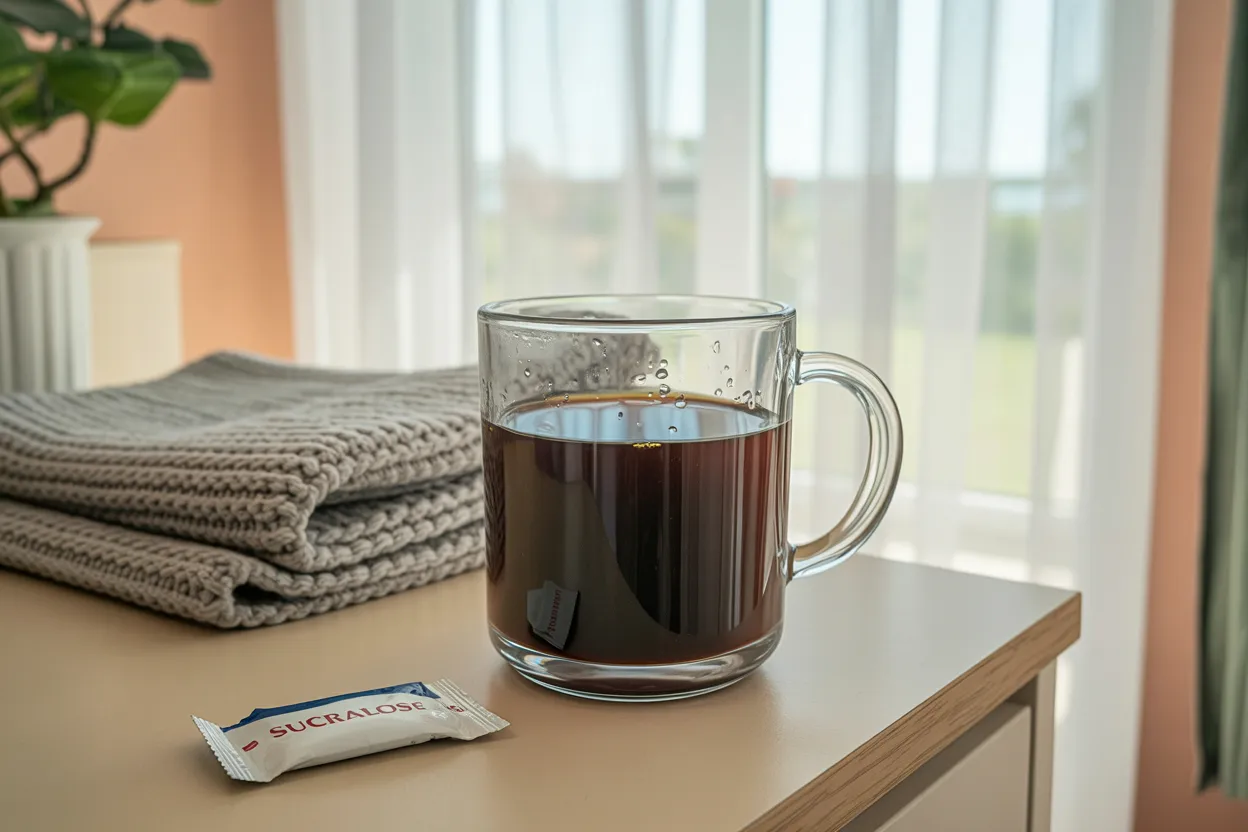
- sweetened coffee keeps you from breaking the fast early
- sugar-free gum prevents mindless snacking
That can be a net win. But if sucralose:
- triggers cravings
- makes you think about food all morning
- leads to overeating later
- turns fasting into a mental tug-of-war
Then it’s working against you.
The World Health Organization now advises against using non-sugar sweeteners as a long-term weight-loss strategy, noting that they don’t consistently lead to fat loss and may reinforce appetite dysregulation over time. That doesn’t mean “never.” It means don’t assume it’s neutral.
Daily check-ins to keep you motivated and accountable.See progress you can feel — and measure.
If Your Goal Is Blood Sugar Stability
This is the grayest area. Sucralose doesn’t add glucose, but it can still:
- influence insulin sensitivity
- alter appetite hormones
- condition the brain to expect sweetness
If you’re fasting to stabilize blood sugar, the safest move is to treat sucralose as a variable, not a freebie. Test it. Don’t rationalize it.
The Hidden Trap: Sucralose Rarely Shows Up Alone
One reason sucralose causes confusion is that it’s often bundled with other things. “Zero sugar” doesn’t mean “nothing happening.” Watch for:
- flavored drinks that still contain small amounts of carbs
- powdered packets with bulking agents like maltodextrin
- pre-workouts with caffeine plus sweeteners (appetite and stress effects stack)
Also remember that caffeine suppresses appetite temporarily. When combined with sweet taste, that can delay hunger and then amplify it later. That crash often gets blamed on fasting. It’s usually the combo.
A Simple 7-Day Sucralose Test
If you want a real answer instead of an internet opinion, test it.
Days 1–3: clean fasts
- water
- black coffee
- plain tea
Days 4–7: add sucralose once daily
- same product
- same time
- no stacking sweeteners
Track:
- hunger waves
- cravings
- sleep quality
- next-meal overeating
- mood and energy
- weight trend
Patterns show up fast when variables stay stable.
Download the Fasting App by Municorn Today to Empower Your Fast
Sucralose doesn’t fit neatly into “allowed” or “forbidden.”
It doesn’t add calories, but it’s not metabolically invisible.
It doesn’t spike glucose for everyone, but it can still shift appetite and insulin dynamics.
It doesn’t automatically ruin a fast, but it can quietly change what you’re getting out of it.
So no, sucralose doesn’t technically break a fast in the calorie sense.
But whether it breaks the benefit depends on your goal and your response.
If you want to stop guessing, log it. Use the Fasting App by Municorn to track when you use sucralose, how your hunger behaves, whether cravings spike, and how your fasting windows actually feel.
Let patterns, not opinions, make the rule for you.
Is sucralose the same as other artificial sweeteners when it comes to fasting?
Not exactly. Sweeteners behave differently in the body — sucralose, stevia, aspartame, and saccharin all have distinct metabolic profiles. Sucralose specifically has been shown in some studies to influence insulin sensitivity when repeatedly paired with carbohydrates, which isn’t true of all sweeteners. Treating them as interchangeable is where a lot of the confusion comes from.
Does sucralose in my coffee count differently than sucralose in a diet soda?
The sucralose itself is the same. What changes is the context — diet soda typically adds carbonation, artificial flavours, and sometimes other additives that can affect appetite and cravings differently than a plain coffee. If sucralose in coffee keeps you in your fast without triggering hunger, that’s a different outcome than a diet soda that sends you toward the fridge an hour later.
Can sucralose affect gut health over time?
There’s emerging evidence that sucralose may alter gut microbiome composition with regular use, though most of the stronger findings come from animal studies. Human evidence is still limited and mixed. It’s not a reason to panic, but it is a reason not to treat “zero calories” as “zero consequence” — particularly if you’re fasting partly for digestive rest.
What about sucralose in pre-workout supplements during a fast?
This is where it gets more complicated. Pre-workouts often stack sucralose with caffeine, beta-alanine, and other compounds that have their own appetite and hormonal effects. Caffeine suppresses hunger temporarily, which can mask a response you’d otherwise notice. If you’re trying to assess how sucralose affects your fast, a pre-workout is one of the worst test environments because too many variables are running at once.
If sucralose doesn’t spike blood sugar, why do some people feel hungrier after having it?
Sweet taste triggers anticipatory responses in the brain and digestive system — the body prepares for incoming calories that don’t arrive. That mismatch can amplify hunger signals in some people, even with no actual glucose involved. It doesn’t happen to everyone, which is part of why the research produces conflicting results. Individual variation is real, not a cop-out.