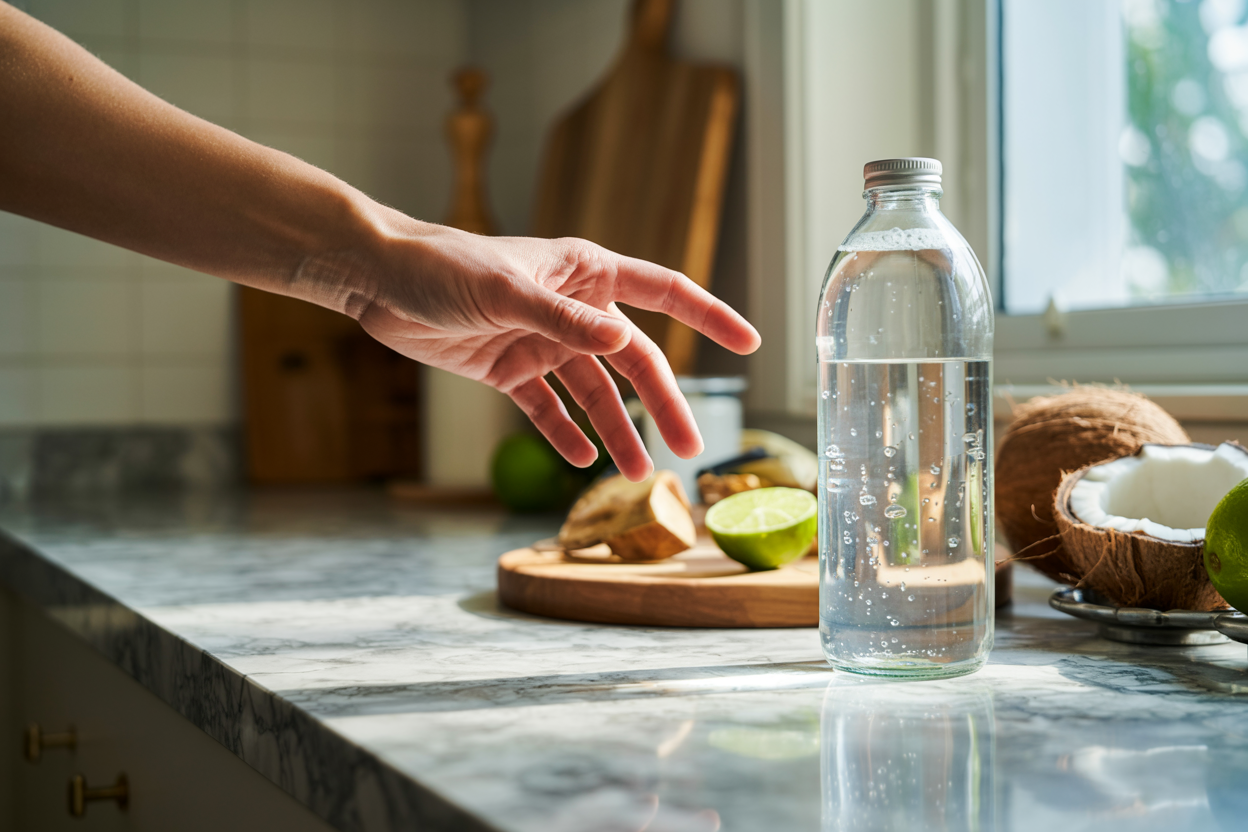

You’re skipping breakfast, you’re thirsty, and you spot a bottle of coconut water in the fridge. It looks light. Pure. Almost virtuous. Healthier than juice and definitely healthier than soda. And when you’re in the middle of a fast, it’s easy to talk yourself into believing it doesn’t “really” count. Just electrolytes and vibes, right?
Not exactly.
Coconut water is refreshing and genuinely good at replacing fluids. But fasting runs on metabolic rules, not marketing, and your body responds to what’s inside that bottle—not what the label promises or what you hope it might be.
Here’s the real story about coconut water and fasting, and when it can actually support your goals instead of silently derailing them.
What’s In Coconut Water?
Coconut water masquerades as electrolyte water, but nutritionally, it sits much closer to light fruit juice.
Natural Electrolytes
It does deliver minerals your body needs:
- Potassium—often 400–600 mg per cup
- A little sodium
- Some magnesium
These help keep cells firing properly, which is why coconut water shows up so often in conversations about rehydration.
Carbohydrates
This is where the fasting conflict begins. A typical cup contains:
- 6–11 grams of sugar, depending on the brand and the maturity of the coconut
- A carbohydrate profile that looks like a dialed-down fruit juice rather than an electrolyte drink
The sugars might be naturally occurring, but your pancreas doesn’t make distinctions about moral purity. Glucose is glucose. Fructose is fructose. They raise insulin just the same.
Calories
Most coconut waters fall between:
- 40–60 calories per cup
That might sound small, but it’s more than enough to pull you straight out of a fasted state. You could be halfway through a 16:8 window and undo the hormonal quiet you were cultivating in a few gulps.
Calorie & Insulin Effects: Why Coconut Water Breaks the Fast
Fasting relies on low insulin and stable blood sugar. Coconut water disrupts both. When you drink those natural sugars:
- Glucose rises
- Insulin rises
- Your body shifts away from fat mobilization
- The fasted metabolic state is interrupted
Research in The American Journal of Clinical Nutrition has shown consistently that simple sugars—whether from fruit juices, sports drinks, or sweetened beverages—trigger rapid insulin release and tilt metabolism toward storage. No loophole for “natural.” No loophole for “light.”
Coconut water behaves like a mild carbohydrate drink because that’s exactly what it is. Compare this to true fast-safe hydration:
- Plain water
- Sparkling water
- Mineral water
- Unsweetened tea or black coffee
- Electrolyte tablets without any sugar
Coconut water doesn’t make that list. It fits cleanly into the “fed-state beverage” category.
Hydration vs Fasting: The Big Misunderstanding
People reach for coconut water because they associate it with hydration. And that part is completely valid.
Where Coconut Water Shines
It’s genuinely helpful:
- After hot-weather workouts
- When you’ve been sweating intensely
- After an illness that left you dehydrated
- During long endurance training sessions
In those moments, electrolytes plus carbohydrates make sense. They help replenish fluid and energy, and coconut water delivers both in a gentle way.
But Hydration and Fasting Are Not the Same
A fasting window is defined by:
- Low glucose
- Low insulin
- Minimal digestive stimulation
- A predictable hormonal rhythm
Coconut water breaks that rhythm. Even half a cup bumps you out of the metabolic rest that fasting is meant to create. If you’re fasting for fat-loss efficiency, insulin sensitivity, or metabolic repair, coconut water works against your process.
A Better Home for Coconut Water: The Eating Window
Where coconut water truly belongs:
- Right after a workout
- In hot climates, when you’re rehydrating
- As part of a smoothie
- As a gentle refeed when breaking a longer fast
Once you’ve opened your eating window, coconut water can be incredibly useful. During the fast, it’s just misplaced.
When Coconut Water Could Fit Your Goals
Fasting styles vary, so placement matters.
Long Fasts or Intense Training
If you’re breaking a 24–48-hour fast or recovering from heavy exercise, coconut water can be a smart first step back into feeding:
- Fast carbs help refill depleted glycogen
- Electrolytes ease the transition out of a long fast
- It’s less jarring on digestion than a full meal
This works because you’re intentionally breaking the fast—not trying to stay inside it.
Every Day 14–16 Hour Fasts
Routine intermittent fasting? Keep the fasting window clean. That means fluids without calories, sugar, or carbs. A single cup of coconut water during a 16-hour fast flips every fasting switch off.
Metabolic Repair and Insulin Sensitivity
If your goal is to:
- Improve insulin sensitivity
- Lower fasting glucose
- Support metabolic regulation
…then any carb-containing drink during a fast will interfere.
Even occasional sugar signals during the fasting period reduce the consistency of insulin-lowering cycles. Fasting’s power comes from hormonal stability. Coconut water interrupts that stability.
Hidden Extras to Watch For
Coconut water isn’t always just coconut water.
Flavored or Sweetened Versions
A lot of brands add:
- Cane sugar
- Fruit pulp
- Pineapple juice
- “Natural flavors” (which often include sweeteners)
- Stabilizers
These often double the sugar content. Some tropical flavors hit 20+ grams of sugar per bottle, putting them squarely in fruit-juice territory.
Sports Blends
Some versions are marketed as athletic drinks with:
- Added sodium
- Added sugar
- Added flavor concentrates
These behave more like Gatorade or Powerade—excellent during sport, terrible during fasting.
If fasting is your focus, the label matters more than the advertising language.
So… Does Coconut Water Break a Fast?
Yes. Coconut water breaks a fast.
Not metaphorically. Not “sort of.” Physiologically.
It contains calories.
It contains natural sugars.
It triggers insulin.
It signals the digestive system that food has arrived.
It turns off fat-mobilizing pathways and shifts your body back toward storage mode.
But none of that makes coconut water unhealthy. It just means it has a place—and that place is inside your eating window, not during your fast.
Used intentionally, coconut water is a fantastic hydration tool. It’s refreshing, mineral-rich, and easy on the stomach. It just doesn’t belong inside the metabolic quiet; your fasting window needs to work.If you want to understand exactly how coconut water influences your own hunger, energy levels, hydration, and cravings, log your intake inside the Fasting App by Municorn. Your body will show you the truth much faster than guesswork ever will.